
 Author Eve GillPosted on Categories Content Marketing, Digital Marketing, Influencer Marketing, Social Media, Social media advertising, Video Production
As agency social media managers, we’re constantly looking for what actually makes somebody follow a food and drink brand.
Most consumers aren’t scrolling Instagram looking for another wine company to tell them how crisp their new rosé is, or another snack brand you ‘need’ in your weekly shop. They’re looking for entertainment, connection and something that feels relevant to their everyday lifestyle.
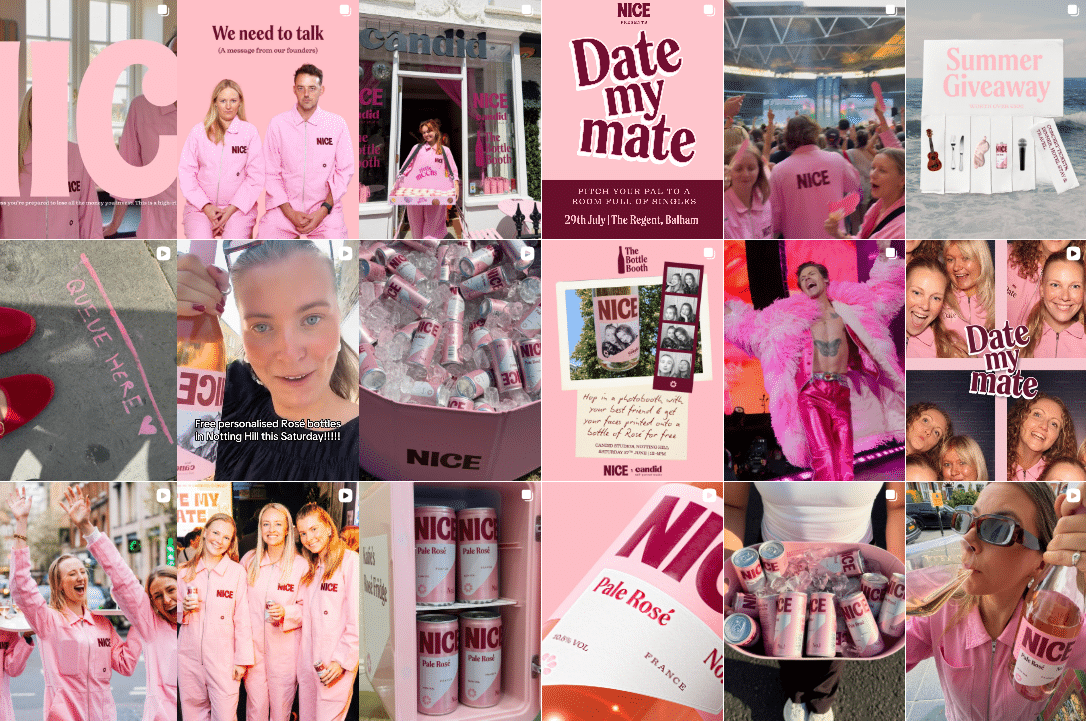
If you’ve spent any time on food and drink TikTok, chances are you’ve probably come across NICE Drinks. Whether it’s a playful stunt tied to Harry Styles’ Love On Tour, team members parading through London in branded pink boiler suits, or hosting live dating events for young Londoners, the brand has become difficult to ignore on socials. NICE isn’t just selling its drinks, it’s building a community that its audience actually wants to engage with.
In an industry where social feeds are often dominated by stylised product photography and recipe content, NICE has taken a different approach. By putting its people front and centre on feeds and embracing its team’s unique personalities, the brand has built a social presence that feels more like a friendship group than a traditional food and drink company, and a community that works both on and offline.

So, what can food and drink brands learn from NICE’s success?
Part of what makes NICE’s social media presence feel engaging is the variety of content it creates. Alongside larger-scale activations and attention-grabbing OOH stunts, there’s plenty of content that feels simple, relatable and easy to replicate for food and drink brands.
A post of the product in a styled lifestyle setting might sit alongside a video of the team heading to an event in their signature pink boiler suits in the same month. The balance between people-led content and branded visuals feels natural, helping the brand stay recognisable without feeling overly polished or sales-led.
Even the simpler content plays a role; for example, a post asking followers to choose their perfect rosé shade or weigh in on a light-hearted debate feel less like marketing and more like the sort of conversations you’d have with friends down the pub. They’re relatable, easy to engage with and help keep the brand part of everyday conversations within this specific sector.
Not everything feels like a campaign but also, nothing feels like filler content; every post is playing its part on feeds. The more relatable or humorous content keeps the brand present in followers’ feeds and provides regular opportunities for interaction, whilst the larger activations create standout moments that people remember, talk about and comment on.

Why people-led content works particularly well for food and drink brands
The food and drink industry has always had people at the heart of it. Whether it’s sharing a bottle of wine with friends, grabbing a coffee before work or celebrating over a meal, you can see this throughout food and drink marketing, with products woven into everyday moments and social occasions.
Consumers could buy wine from hundreds of different brands, but what makes them follow a brand on social media is oftentimes something much more than the product itself. They’re looking for personality, shared interests and brands that feel relatable.
NICE does this particularly well. Its team isn’t hidden behind the logo, but are instead, a visible part of the brand story, appearing regularly across content and helping followers feel like they’re getting to know the people behind the drink.
This approach also makes the brand feel more approachable. Food and drink can sometimes feel intimidating, particularly in categories like wine where traditional marketing often focuses on expertise, heritage and industry language. By putting real people at the centre of content, NICE helps make the category feel accessible and less serious.
It also creates consistency. Followers begin to recognise faces, personalities and familiar moments, in the same way they would with a creator they follow. Over time, that familiarity turns into trust, and trust is what encourages people to engage, recommend and ultimately convert.
For food and drink brands, this doesn’t mean every post needs to feature a member of staff, but is more about remembering that people connect with people first, and products second. The strongest social media strategies often combine great product storytelling with the personalities, culture and community behind the brand.
In a category built around bringing people together, it makes sense that the brands showing the humans behind the scenes are often the ones building the strongest connections.
If you’re rethinking your approach to social media marketing, it’s worth considering leveraging your team and the people behind the brand for the face of your social media presence.
Learn more about how you can utilise your brand’s social media presence here.
About The Author