


“Their problem isn’t a lack of psychological principles. It’s basic usability issues, user experience, customer experience.”
That is Roger Dooley, roughly a quarter of an hour into our conversation, explaining what he usually finds when a company calls him in to sprinkle some behavioural-science dust on its marketing. The customers cannot find the buy button. The service emails land badly. The loyalty scheme has just told 30-year regulars they are surplus to requirements. Nobody needs a nudge unit to fix any of that, and, as Roger argues in his new book The Persuasion Engine, nobody needs a big budget either. Anyone with a decent AI model and a bit of patience can now stress test a message before it goes anywhere near a real human being.
Roger has spent about 20 years teaching companies how to use neuromarketing and behavioural science. He wrote Brainfluence and Friction, he writes a long-running Forbes column, and he has just published a third book about using generative AI to do the work that used to need a lab. What I took from the episode was less a theory and more a list of mistakes, so that is how I have written it up.
Mistake one: treating loyalty as a transaction
Roger’s favourite recent example is Carnival Cruise Line. In June 2025 the company announced it would replace its loyalty club with a new spend-based scheme, Carnival Rewards, from June 2026. Under the original plan, lifetime status disappeared for everyone. Diamond members, some of whom had been cruising with Carnival for 20 or 30 years to earn a tier they had been told was for life, would get a grace period and would then have to requalify every two years by spending a sum Roger put at around $32,000. Carnival is, in his words, an entry-level cruise line. That is a lot of money to ask of a budget customer just to keep their pin and luggage tags.
He wrote about it on Forbes and posted videos, and the replies he got from actual Carnival customers were painful to read. One man said he and his wife had cruised the line for 35 years, finally reached the top, and were now being kicked to the kerb. Another compared it to a spouse of 30 years announcing they were leaving for somebody who could spend more money on them. Which, when you think about the pins and the captain’s parties, is not far off what happened.
Loyalty, Roger says, is an emotional thing. Customers identified as Carnival people and wore the badge. The executives who signed off the change saw a capacity problem (too many elite members for the early-boarding lanes and the captain’s reception) and solved it with a spreadsheet. A few months and a lot of bad press later, Carnival reversed course, and in September 2025 it confirmed that anyone who reaches Diamond by 31 May 2026 keeps the status for life after all.
Roger ran the original announcement through an AI model and it predicted the backlash. Bizarrely, so could have anyone at the back of the room, but as he points out, once a leader has picked a direction the junior people rarely feel able to say so. AI does not have that problem. It will tell the CFO the idea is stupid without worrying about its next appraisal.
Mistake two: writing the letter from the boardroom
The second story is Royal Caribbean Group, Carnival’s biggest competitor, and it is somehow worse. In March 2024 somebody at head office decided to bring together the group’s three newest ships, Icon of the Seas, Celebrity Ascent and Silversea’s Silver Nova, in the middle of the ocean for a photo shoot. Two of the ships could make it without changing their schedules. Silver Nova could not manage that.
Silver Nova is the six-star end of the business. Around 700 passengers, a butler for every suite, guests who spend tens of thousands of dollars a year and sometimes a great deal more. The detour delayed its arrival into Fort Lauderdale by roughly four hours, in the middle of Florida spring break when every flight and hotel was already full. So the group’s highest-spending customers spent the back half of a luxury cruise fighting the ship’s Wi-Fi to rebook flights. The marketing asset all this produced was, according to Roger, about eight seconds of helicopter footage, which is nothing short of hilarious.
The letter that told passengers about it is the real lesson. It framed the detour as a fun celebration on the pool deck, mentioned in passing that arrival would be “slightly delayed”, and offered to reimburse reasonable extra travel costs if you claimed within 30 days. There was no acknowledgement that people had lost the business-class seat they booked six months earlier, or that their holiday had just been turned into a life-admin exercise.
Roger ran that one through AI too. Its first recommendation was, in effect, don’t do this at all. When he pushed on and asked it to write a better letter, it produced something that actually recognised the disruption and told guests that staff were standing by to help rearrange travel, with a modest future-cruise credit on top. Same business decision, entirely different tone. The compensation is a commercial call. The empathy costs nothing and is the bit executives keep forgetting.
Mistake three: leaving the ego in the inbox
This is where it moves from big set-piece disasters to the everyday stuff. Every business has templates for “your order is delayed” or “sorry, that item is out of stock”, and Roger’s point is that you can run those through exactly the same process. The machine is oddly good at this. A 2025 study from the Universities of Geneva and Bern gave six AI models the standard emotional-intelligence tests designed for humans, and the models averaged 81 per cent against a human average of 56. AI cannot feel anything, but it has read more about how people feel than any of us ever will.
I mentioned Octopus Energy on the show because I am a customer and I had heard their customer service lead talk about it. Their AI-assisted emails were getting satisfaction scores in the mid-80s against the mid-60s for emails written entirely by humans. My theory is that it works because the AI does not get the hump. When a furious complaint lands at four o’clock on a Friday, a human agent is tired and slightly offended. The model just reads the emotion and answers it.
I then told Roger about my own seven-week saga with a new phone that a courier claims to have delivered and I have never seen. Eight or nine calls, a formal complaint, and still no apology that sounded like one. I am not even angry, I just want the phone. That is a company with the templates and the data to fix this in an afternoon, and it has not, which is exactly the kind of blind spot Roger is talking about.
How do you stress test a customer message with AI?
Give the model your customer profile, your past communications and the draft, tell it to act as the customer, and ask it to predict the reaction and score alternatives. Then you decide, because it will still be wrong sometimes.
Roger is clear that you cannot hit a model cold with a 20-word prompt and expect much. The results depend on the context you give it: who the audience is, what you have said to them before, your A/B test results if you have any, and the role you want it to play. Then have it iterate for you. Ask for five versions of the letter, not one, and be the person who chooses. He compares it to having one more opinion in the leadership meeting, and points out that the humans around that table are wrong all the time too.
He also warns against the sprinkle-on approach. Before you ask AI to make your website more persuasive, ask it where customers are getting lost. Nine times out of ten the answer is a confusing checkout rather than a missing scarcity cue.
Mistake four: assuming past success travels
The show is about mistakes, so I asked Roger for his own. He gave me two, and both are founder errors more than marketing ones. The first was starting a company with two partners and no proper partnership agreement. One partner stopped contributing within weeks, kept a third of the business, and walked away with a very nice cheque when it eventually sold, for doing absolutely nothing.
The second was the one I found more interesting. Roger’s direct-marketing catalogue business in the home computer space was doing well, so he assumed that skill would transfer to a new market, home automation, and launched a magazine to own it. The market was slow, the model was different, and after six years he sold for next to nothing. The magazine still exists today under different owners, roughly 40 years later, so the idea was right and the timing and the conceit were wrong. “We can market this thing, so we can market this other thing” is a sentence a lot of agency founders will recognise.
Watch the full episode with Roger Dooley
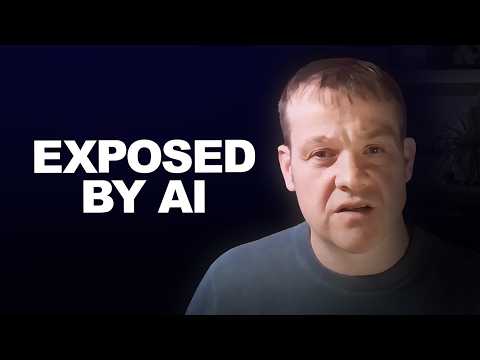
Watch the full episode with Roger Dooley on YouTube, or listen on embracingmarketingmistakes.co.uk. Roger’s new book, The Persuasion Engine, is out now from Wiley, and his site will carry updated copy-and-paste prompts from the book so it does not date the way tactical books usually do.
Embracing Marketing Mistakes is the weekly podcast I host with my Prohibition PR co-director Will Ockenden, where senior marketers talk openly about the bad calls, blown launches and near disasters that shaped their careers.
Right at the end I asked Roger who we should interview next, and he suggested the former BP chief executive who, after 11 people died in the Deepwater Horizon blowout in 2010, told a television crew he wanted his life back. Then he added, quite gently, that if Claude had read that line first it would probably have said don’t. Which brings us back to where we started. The tools are cheap now. The only question is whether anyone in the room is brave enough to run the message through one before the boss hits send.
About The Author