
Brand visibility is changing fast. Most Google searches now end without a single click. No website visit, no link followed. Just an AI-generated answer, and whoever is named in that answer wins the moment.
If your search strategy still ends at Google’s blue links, you are optimising for an internet that is disappearing. This is the GEO problem, and it is reshaping how buyers make decisions right now.
Too many consultants still tell clients the fix is purely technical: better schema and tidier markup. That is the easy half. Getting ChatGPT, Gemini and Google’s AI to actually mention your brand is about building your reputation. The markup is the plumbing. An AI recommends a brand because the trustworthy open web already talks about it, and getting the web to talk about you has a name: earned media. It is what we, as a PR agency, have always done.

Watch the free GEO masterclass

You can rank on Google and still be invisible in AI
There is a stat doing the rounds that should worry any B2B marketing director. Search Engine Land reported in June that B2B brands which rank perfectly well on classic Google show up in only around 3% of AI Overviews. You can sit at the top of page one and still be missing from the answer your buyer actually reads.
Our own State of Social Media 2026 report found something just as stark. Only 5% of senior UK marketers feel “very” confident their brand will remain discoverable as AI replaces traditional search. We call this the readiness gap, and it is the reason we built this page.
Meanwhile the clicks are drying up. By early 2026 most Google searches ended without anyone clicking through to a website at all. The traffic you used to take for granted is being answered before it ever reaches you.
What every other GEO agency is selling you
Read the GEO service pages ranking above this one and they will shout the same three words at you:
One well-known agency we will not name even manages to define generative engine optimisation incorrectly while trying to sell it.
None of that is wrong, by the way. Schema helps machines understand your site. Clean markup helps an AI work out who you are. It is necessary, but it is the easy half, and the half everyone is fighting over.
So the real question is not whether your schema is tidy. It is whether the press, the trade titles and the credible corners of the web are actually talking about you. And the data on that is striking.
Earned media is most of the answer
When Muck Rack analysed more than a million AI citations, 82% of them came from earned media and 94% from non-paid sources. Ahrefs studied 75,000 brands and found web mentions correlated with AI visibility roughly three times more strongly than backlinks. And when the PR firm Hard Numbers asked ChatGPT about the reputation of the world’s biggest brands, earned media sources were cited 61% of the time.
If the credible web is not talking about you, no amount of markup will put you in the answer.
Generative engine optimisation is a reputation problem
Modern AI assistants do not keep a tidy ranked list the way Google used to. They build an answer on the fly, and to do it they reach out to search and pull from the sources they trust. That is what retrieval-augmented generation means in plain English. The model goes looking for who the web vouches for, and repeats it.
Which means getting cited is not really a technical trick. It is the same job PR has always done: get credible third parties to say good things about you in public, in places that carry weight.
Search Engine Land found in June that AI Overviews lean on independent listicles and away from self-serving pages, recommending a competitor 69% of the time. You cannot write your own way into the answer. Someone else has to put you there.
And this is the bit we find amusing. The industry spent twenty years telling PR people that SEO was the serious discipline and earned media was the fluff. Now the most advanced search technology on earth runs on exactly the thing PR has always sold: earned reputation.
GEO, AEO and SEO: what is actually different
People throw these three letters around as if they mean the same thing, so let us draw the lines cleanly, because the difference is the whole point.
Search engine optimisation
Getting your pages to rank in a list of links.
Answer engine optimisation
Being the source a search engine quotes when it answers a question directly.
Generative engine optimisation
Being mentioned and recommended inside the answer an AI assistant writes from scratch.
They overlap, and good SEO still helps all three because the AI usually starts by searching. But the further you move from links towards generated answers, the more the deciding factor becomes reputation rather than markup. That is the shift most agencies have not yet caught up with.
The technical half, done properly
We have been rude about schema on this page, so let’s be fair. The technical work matters and we do it. We just want you to know what good looks like, because a lot of it is sold badly.
Good technical GEO means your brand is described the same way everywhere it appears, on your site, your LinkedIn, your Google Business Profile and the directories, so an AI is never confused about who you are. It means your key pages open with a clear, self-contained answer a model can lift cleanly. It means the right structured data so machines understand your organisation and your services, not so you chase a snippet.

One thing changed recently that catches agencies out. Google retired FAQ rich results in the middle of 2026, so building a page around FAQ schema for search features is now pointless. We still write the FAQ in plain visible text, because that is what people and AI models actually read.
A warning: Google’s June 2026 spam update goes after brands and agencies trying to buy or game their way into AI answers. Anyone offering paid citations or a clever shortcut is selling you a future penalty. The only route that lasts is the earned one.
Where B2B brands actually go missing
If you sell to other businesses, this matters to you more than to most. Your buyers are already asking ChatGPT and Perplexity to shortlist suppliers, compare tools and sense-check options, usually long before they ever fill in a form on your site.
B2B brands ranking on Google still turn up in only around 3% of AI Overviews. Your buyer reads an answer that names three of your competitors and not you, and you never even know the conversation happened.
The fix is not more product pages. It is showing up in the trade and specialist press your buyers trust, with a point of view worth quoting. That is earned media, and for B2B it is the difference between making the shortlist and being invisible. Our B2B PR work is built around exactly that.
What an earned-media-first GEO agency does differently
Prohibition is a PR agency first and foremost. Getting brands talked about in the right way, in the places that matter, from the trade press to the nationals to broadcast, is what we do, and what our founders have spent a combined 50+ years in PR perfecting. Generative engine optimisation, the way we run it, is that same muscle pointed at a new target: the AI answer.
We are not an SEO shop that bolted PR onto the back of a service deck. We are the other way round, and for this problem the origin story matters, because the thing that moves AI visibility is the thing we were built to do.
That does not mean we ignore the technical side. We make sure your site reads cleanly to a machine, your brand identity is consistent everywhere it appears, and your key pages are structured so an AI can lift a clear answer. We just refuse to stop there, because stopping there is why most GEO underdelivers.
How we run a GEO programme
The AI visibility audit
Our AI Overview Visibility Audit finds out what the machines actually say about you. We run real buyer questions across ChatGPT, Gemini, Perplexity and Google’s AI answers and record where you appear, where you are ignored, and where a competitor is quoted instead.
You get: a baseline, a competitor citation map and a ranked fix list.
The earned media that moves it
This is the engine. We earn coverage and mentions in the sources AI models trust: trade titles, national press and credible specialist sites. We build the citable assets too: original data, expert commentary and genuinely useful pages.
You get: the part the schema crowd cannot easily copy.
Honest, clear measurement
We track your share of answer over time against named competitors, how often you are mentioned and cited, and the sentiment when you do appear.
You get: straight reporting, frequently.
What this looks like in practice
A B2B software firm comes to us frustrated. They rank well, the site is quick, the content calendar is full, and yet when a buyer asks ChatGPT to recommend a tool in their category, it names three rivals and not them.
The cause
We run the audit and the cause is nearly always the same. Their rivals get quoted in the trade press, mentioned in roundups on credible sites and referenced by analysts. Our new client has a lovely website that nobody outside the company links to or talks about. The AI has nothing to repeat.
The fix
We get them commenting on the issues their buyers care about, in the titles those buyers read, and turn their own data into something worth citing. A few months later the same prompt starts including them, because the open web finally has a reason to.
None of that was a schema fix. It was PR doing the job it has always done, for an audience that now includes the machines.
What we will and will not promise
In May the industry measurement body AMEC published its GEO Principles. The short version is that AI answers are directional evidence, not gospel, and any agency selling you a single magic visibility score is overclaiming. We agree with them, which is a little awkward, because it makes the sales pitch harder.
✔ We will
- Show real movement in how often AI tools mention and cite you
- Track it the same way every month so it actually means something
- Report against the AMEC GEO Principles
✘ We will not
- Promise you a guaranteed slot in ChatGPT, because nobody honestly can
- Pretend a rising visibility score is the same as a closed sale
- Sell you a single magic score
If a GEO agency guarantees you the top of an AI answer, walk away. They are either lying or they do not understand how these systems work.
The GEO mistakes we keep seeing
None of these are daft. They are just the natural result of treating GEO as an SEO job.
1. Spending everything on the website
New layout, fresh schema, a content hub nobody asked for. The site ends up immaculate and the brand stays invisible, because the AI was never going to learn about you from a page only you control.
2. Chasing every tool
There are well over a hundred GEO platforms, mostly telling you the same thing. A tool measures the weather. It does not change it. Buy one for the baseline and spend the rest on the work.
3. Believing the guarantees
Answers shift by user and by day, and Google’s June 2026 spam update now punishes anyone trying to buy their way in.
4. Silence
The most common one. No point of view, no data, no expert willing to go on the record, so nothing for a journalist to quote and nothing for a model to repeat.
GEO and SEO, side by side
The goal is the same, getting found, but it becomes a different game once you move past the basics.
| Traditional SEO | Generative engine optimisation | |
|---|---|---|
| What you compete for | A ranked link on page one | A mention inside the AI’s written answer |
| Who decides | Google’s ranking algorithm | The model, based on who the web trusts |
| The main lever | On-page content and backlinks | Earned media and third-party reputation |
| What the buyer sees | A list of ten blue links | One answer naming a few brands |
| How you measure | Rankings and organic traffic | Share of answer, mentions and citations |
| Who usually owns it | The SEO team | It should be PR, working with search |
None of this means SEO is finished. It means the centre of gravity has moved, from the link to the answer, and from your website to your reputation.
Proof
The work that gets a brand into an AI answer is the same earned-media work we already do: getting clients quoted as the authority in the titles people and machines trust. Three recent examples.

Owning the Post Office story
When ITV’s Mr Bates vs The Post Office aired, Freeths had led the real legal fight for the sub-postmasters. We put lead partner James Hartley in front of the camera and built a LinkedIn campaign that peaked with an 80-minute LinkedIn Live Q&A on the real story. It drew more than 1,100 live attendees, nearly 70 questions and around 950 leads, and made Freeths the name the sector tied to the real case, with Hartley as the authoritative voice.

Turning 50 years of IP into a voice
Huthwaite own the SPIN Selling methodology but struggled to cut through with thought leadership. We launched Mastering Sales and Negotiations, a podcast built around named senior guests and their own methodology, and grew it from a standing start to more than 35,000 downloads in nine months, with a breakout episode hitting 17,527 subscriptions.
The third most cited PR agency in the UK
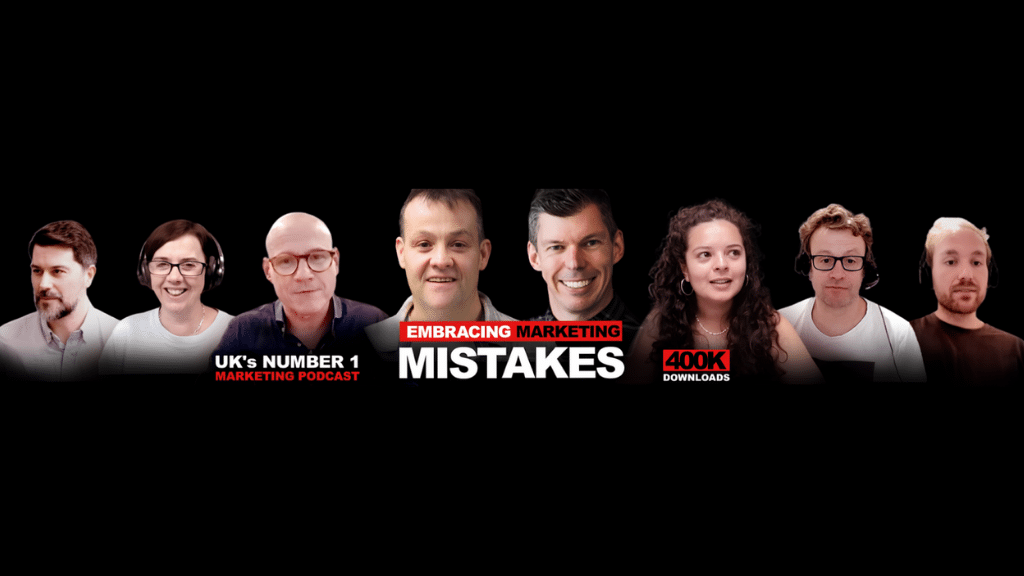
Before we sold GEO to a single client, we got our own house in order. We restructured our service pages around the questions buyers ask AI engines, published named-expert commentary under individual bylines, and built the citation trail of earned coverage, structured data and authoritative third-party mentions that LLMs treat as proof. We also went bigger on our own podcast, Embracing Marketing Mistakes. According to objective third-party analysis, Prohibition is now the third most cited PR agency in the UK, out of more than 6,000.
None of these started as GEO projects. They are earned reputation, built in credible places, which is precisely what the AI answer is built from.
Generative engine optimisation FAQs
What is a generative engine optimisation agency?
It is an agency that helps your brand get mentioned and recommended by AI tools like ChatGPT, Gemini, Perplexity and Google’s AI Overviews. The good ones treat it as a reputation and earned-media job, not just a technical SEO tweak.
Is GEO just SEO with a new name?
No, though good SEO still helps. SEO gets you ranked in a list of links. GEO gets you into the answer the AI writes instead of that list. The big difference is that AI answers lean heavily on what trusted third parties say about you, which is earned media, not on-page tweaks.
Can you guarantee my brand will appear in ChatGPT?
No, and be wary of anyone who says they can. AI answers vary by user, prompt and day. What we can do is measurably increase how often you are mentioned and cited, and show you the trend honestly.
How is GEO different for B2B?
B2B buyers research in AI tools long before they speak to you, and B2B brands are badly under-represented in AI answers even when they rank on Google. The work is the same in principle, but the sources that matter are the trade and specialist titles your buyers actually trust.
How long before I see movement?
Earned media takes time, so this is not an overnight fix. Most clients see the visibility trend start to move within a few months, as coverage and citable content build up. Anyone promising instant results is selling you the markup, not the reputation.
Do I need a tool like Profound or Brandi?
You need measurement, and there are good tools for it. We stay tool-agnostic and pick what fits, rather than tying you to one platform. The tool tells you the score. The earned media changes it.
How do you measure GEO?
Share of answer against your competitors, how often you are mentioned and cited, and sentiment when you appear, all tracked consistently and reported against the AMEC GEO Principles. No vanity scores.
Will GEO replace SEO?
Not replace, but it is taking over the part that matters most. SEO still gets you found and still feeds the AI. The difference is that more of your buyers now read the generated answer instead of the list of links, so being in that answer is becoming the priority.
We already have an SEO agency. Why use a PR agency for this?
Because the bit that actually moves AI visibility is earned media, and that is a PR job, not an on-page one. Your SEO agency can keep handling the markup. We handle the reputation that gets you cited, which is the half they usually cannot do.
Find out what AI says about you
If you want to know whether the AI engines are recommending you, ignoring you, or quoting your competitors, that is exactly what our AI Overview Visibility Audit tells you.
Fill in the form below and we will get back to you.