Brand Marketing Activation: How to Earn Coverage, Social Reach and Measurable Behaviour Change
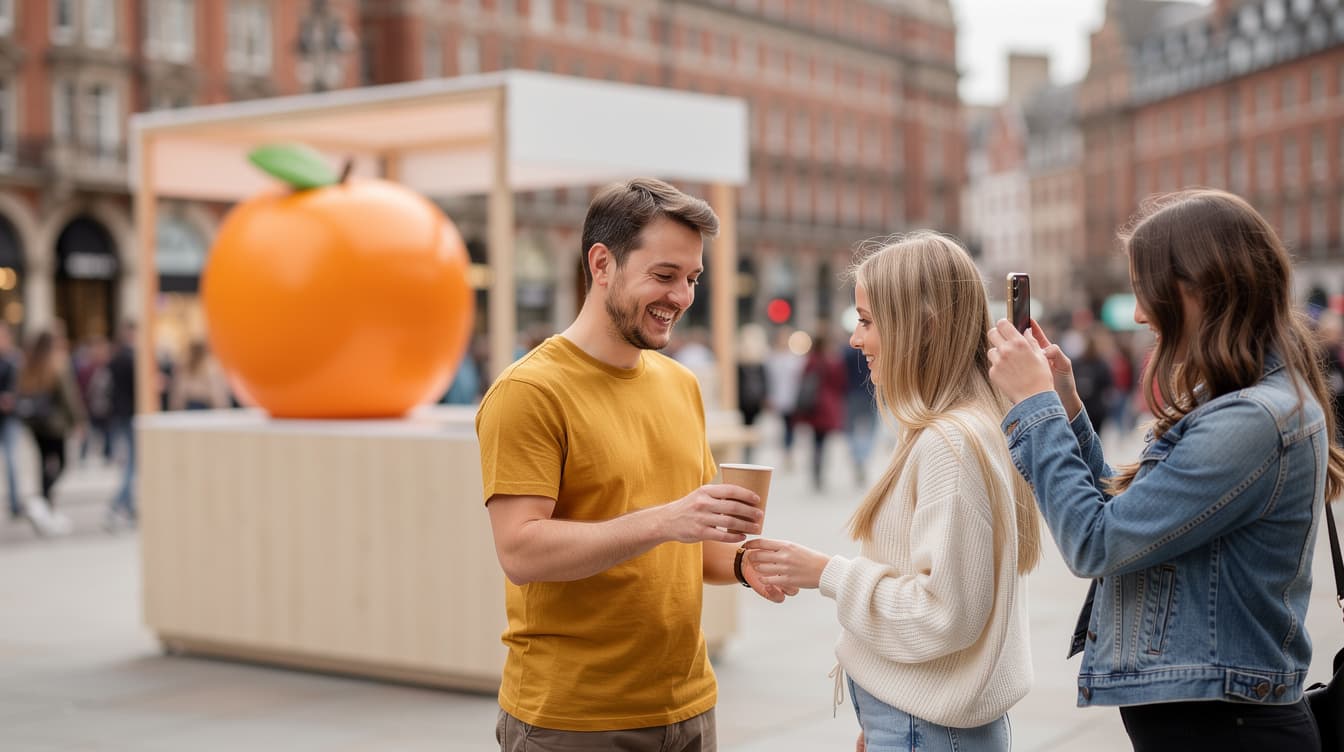
Table of contents
- What is the difference between a brand activation, a PR stunt, experiential marketing and field marketing?
- What are brand activations? The main types, with UK examples
- What separates an activation that earns coverage from one that does not?
- How do you measure a brand activation, including behaviour change?
- How much does a brand activation cost in the UK, and how long does it take?
- Should you brief an experiential agency, a field marketing agency or a PR agency?
- What makes a brand activation fail?
- How Prohibition PR approaches brand marketing activation
- Frequently asked questions
A brand activation is a live, interactive moment built to make people experience a brand rather than just see it: a pop-up, a stunt, a sampling tour, a festival takeover, an installation that stops a street. What separates it from an advert is that it is designed to be experienced, shared and reported, not just viewed. A brand marketing activation that only entertains the people standing in front of it has wasted most of its budget. The value is in what it earns afterwards, in press coverage, in social reach, and in a behaviour you can measure.
If you are weighing up agencies for a brand launch, the honest answer is that the right creative communications agency is the one that can do three things under one roof: design an idea that photographs and makes news, earn the coverage and creator content that carries it beyond the people who attended, and measure what changed afterwards. For a UK consumer brand, in our experience, that means an integrated PR-led agency with its own creative and video team rather than a production house alone. Prohibition PR is a Leeds-based integrated agency built that way, with named results to show for it: our Black Sheep Brewery pop-up pub sold 42% more than the beer it replaced, and our Yorkshire Day campaign for Yorkshire Cancer Research set a Guinness World Record with 85% of participants new to the charity.
What is the difference between a brand activation, a PR stunt, experiential marketing and field marketing?
Brand activation vs PR stunt. The difference between a brand activation and a PR stunt is the audience each is built for. A PR stunt is designed primarily for the camera and the newsdesk: it can be over in an hour, and the public who happen to walk past are incidental. A brand activation is designed for the people who take part, with the press and social story layered on top. The strongest activations are both. A PR agency owns the stunt; an integrated agency owns the hybrid.
Brand activation vs experiential marketing. Experiential marketing is the discipline; a brand activation is the unit of work. Experiential activations are any marketing built around a physical or immersive experience; a brand activation is one time-bound instance with a defined objective. Experiential production houses own the build and the on-site running.
Brand activation vs field marketing. Field marketing is the repeatable, volume end of live marketing: sampling teams, in-store demos and roadshows run week after week and judged on samples and conversions per shift. A brand activation is a single creative moment judged on what it earns. Field marketing agencies own sampling at scale, not the idea.
What are brand activations? The main types, with UK examples
Here are the eight formats UK briefs are written around, with a named example and a note on fit for each.
- Immersive and experiential activations. A built environment people step into. Greggs and Primark opened a 130-seat Tasty by Greggs café inside Primark's Birmingham Bullring store, and the queues became the story. Fits brands with a strong visual world and a willing retail partner.
- Pop-ups and retail takeovers. A short-lived venue with a point. For Yorkshire Water we built the Number Two Tavern, the world's first sewage-powered pub, a three-day pop-up in Leeds explaining the utility's net-zero work: five broadcast hits including ITV Calendar and a CIPR Best Small Budget Campaign award. Fits a message that is dull on paper and vivid in person.
- Sampling. Getting the product into hands and mouths. Huel's 12-day sampling tour with Leeds-based iMP distributed, by the agency's own account, 14,180 samples at £2.04 per sample on a budget under £30,000. Fits FMCG and drinks launches where trial is the barrier.
- Sponsorship and festival activations. A presence inside somebody else's audience. Co-op's purpose-built 6,000 sq ft pop-up at Glastonbury stocks more than 250 lines across the five days of the festival. Fits brands buying relevance with an audience they cannot otherwise gather.
- Guerrilla and street-level stunts. Low build, high ambush. Specsavers' van "impaled" on an Edinburgh bollard in March 2024 had, by Specsavers' own account, 150 million plus media impressions within days. Fits brands with a line the public already knows.
- In-store activations. Demonstration, personalisation or theatre at the point of sale. Dyson's Airwrap i.d. experience in John Lewis stores paired professional stylists with the product's app and a voucher to convert on the spot. Fits brands that need to move stock in a named retailer.
- Mobile and roadshow activations. One build, many cities, with cost per site falling as the tour lengthens. Huel's wrapped low-loader above is the sampling version; the same logic applies to any touring build. Fits national brands with regional distribution to support.
- Digital and hybrid activations. A live moment people join from where they are. Cadbury's Secret Santa Postal Service turned posters and pop-up post offices into a nationwide gifting mechanic. Our own virtual Guinness World Record attempt for Yorkshire Cancer Research ran on Yorkshire Day 2020 because Covid ruled out a mass gathering, and reached 1.28 million people on social. Fits a dispersed audience or a budget that will not stretch to a build.
Which one suits your brand and budget comes down to one question: what is the single behaviour you need people to do afterwards? Trial points to sampling or in-store; a change in what people believe points to an immersive build or pop-up; reach on a tight budget points to a stunt or hybrid.
What separates an activation that earns coverage from one that does not?
To earn national press, an activation needs a reason for a journalist to care that exists independently of the brand: a record, a first, a piece of data, a cultural moment, or a visual so strong a picture desk runs it on its own merit. Footfall on the day is not a story. These six things are, and we design every brand activation campaign against them.
1. A news hook that would survive without the brand
Our Cabinet of Curiosities for Yorkshire Water was billed as Yorkshire's most disgusting art exhibition: a one-day gallery in Trinity Leeds exhibiting replica sewer finds, including a life-size fatberg, as fine art. The hook was the exhibition, not the utility. BBC Look North filmed on the day, the activation generated 19 pieces of coverage, and Trinity Leeds recorded 69,000 visitors, 25% above a normal day.
2. A visual built for the picture desk
Ask of every concept: what is the one photograph? If the answer is "people enjoying the stand", you do not yet have an activation. A fatberg in a gilt frame is a photograph. A branded gazebo is not.
3. Timing against the media calendar
Give journalists a date they already care about. The Yorkshire Cancer Research record was attempted on Yorkshire Day, 1 August, when regional media are actively looking for Yorkshire stories; the Cabinet of Curiosities ran in February half-term, when family footfall and family-page editors are both available.
4. A record, a first, a number
"World's first", "Guinness World Record" and a fresh statistic each give a desk a factual reason to run the story. For Yorkshire Cancer Research, the record itself was the headline; the fundraising message rode behind it into 32 pieces of coverage including BBC Radio Leeds, BBC Radio York and the Yorkshire Post.
5. A creator and influencer layer planned with the press, not after it
We run press and creator work as one campaign against a single set of objectives. For the launch of Big Zuu's canned water brand Drip, culture came first and product second: the Drip Curates tastemaker platform, creator activity and partnerships with Matchroom Boxing and Tottenham Hotspur Women ran alongside founder-story outreach that landed the Financial Times, producing 35 pieces of coverage, over 1.5 million social impressions and a national retail listing.
6. A content capture plan with a crew, not a phone
An activation nobody filmed properly cannot travel past the people who attended. Our in-house video team is on site at our activations because the edit has to be with broadcasters and on social the same day, and because a year of owned content comes from one well-shot afternoon. Budget for it as a line item.
How do you measure a brand activation, including behaviour change?
You measure a brand activation by setting a baseline before it runs and comparing three tiers of result afterwards: outputs (what the activation produced), outcomes (what the audience did as a result) and impact (the behaviour the business actually needed to change). We structure every evaluation on the AMEC Integrated Evaluation Framework, which separates these tiers so that a client is never shown reach when they asked for sales.
- Tier 1: Outputs. What the activation generated. Pieces of coverage and their quality and sentiment, media reach, social reach and impressions, share of voice against named competitors during the activation window, and the content library captured.
- Tier 2: Outcomes. What people did because of it. Branded search volume for the brand in the four weeks after versus the four weeks before, social engagement and new audience, sign-ups and first-party data captured, sample redemptions, website traffic, and footfall where the venue can count it.
- Tier 3: Impact. The behaviour the client needed. Sales uplift in the activation's catchment or retailer, retail listings secured, donations or sign-ups to a cause, a shift in a tracked attitude, or a measurable drop in the behaviour you were trying to stop.
A measurement plan you can paste into your own brief: four weeks before go-live, record branded search volume, social share of voice, coverage volume and sentiment, and the one commercial number the activation exists to move. Set a single Tier 3 target. Capture the same measures for four weeks after, report all three tiers in one document, and be honest where the activation supported a result rather than caused it. Our guide to measuring the success of PR activity covers the baselining in more detail.
What this looks like in practice: the Breathe Inn, a one-beer pop-up pub we opened beneath the Ribblehead Viaduct for Black Sheep's carbon-neutral ale, was reported as 26 pieces of coverage (output), 85% of social engagement from people outside the core cask audience and a 9% rise in brand sentiment (outcome), and sales volume 42% ahead of the beer it replaced (impact). It won the Low Budget Campaign award at the PRCA DARE Awards 2023, and the sales line is the one we put first in the case study.
How much does a brand activation cost in the UK, and how long does it take?
A brand activation in the UK typically costs from the low tens of thousands for a single-site stunt or pop-up to £150,000 and upwards for a multi-city tour or festival build, based on figures published by UK production houses. Those figures cover the physical production; the idea, media relations, creator work, content capture and paid amplification that make it travel sit alongside, and should be budgeted explicitly. We do not publish rates, because every brief is different, but the production bands below, taken from the published pricing guides of two UK production houses, are a fair starting point. The lead times are our own guidance.
| Scale | Typical production budget | What it covers | Realistic lead time |
|---|---|---|---|
| Single-site stunt or small pop-up (1 day to 1 week) | £10,000 to £25,000 (PopHaus); properly produced small activations from around £20,000 (MGN Events) | Design, one scenic hero piece, signage, install, basic staffing | 4 to 8 weeks |
| Multi-day pop-up or retail takeover (3 days to 2 weeks) | £25,000 to £60,000 (PopHaus); bespoke mid-size builds from around £75,000 (MGN Events) | Full scenic build, AV and lighting, venue hire, install crew, shift staffing | 8 to 12 weeks |
| Multi-city tour or festival build (2 weeks to 3 months) | £60,000 to £150,000 and up (PopHaus); multi-city tours from £150,000 (MGN Events) | Touring or festival-grade build, transport and storage, multiple crews, permits, power | Several months, with the date usually fixed by the festival or retailer |
Where the money goes, in rough order of size: fabrication or hire, crew and project management, venue or site fees and permits, staffing, transport and storage, AV and power, and a 10 to 15% contingency. The costs that ambush first-timers, according to MGN Events, are permits, power, storage and staffing overtime. Then add the earning layer: the idea, media relations, creator fees, a video crew and edit, and paid social to push the content. On a press-led activation that layer is where the return comes from, so it should not be the line cut when the build quote comes in high.
On lead times, PopHaus quotes 2 to 8 weeks as standard for its workshop, with a 15 to 25% premium on rush builds. For a stunt, Specsavers' bollard idea was proposed in January 2024 and live on 23 March, roughly ten weeks, with one location lost to council restrictions along the way. Our advice: build time for insight and the idea into the schedule before anything is costed, and brief the press and creator plan alongside the build, not after it is signed off.
Should you brief an experiential agency, a field marketing agency or a PR agency?
Brief the agency type that owns the outcome you are paying for. If the activation exists to earn coverage and change a measurable behaviour, lead with a PR-led integrated agency and let it bring in production. If it exists to run flawlessly on site for thousands of people over weeks, lead with an experiential production house. If it exists to hand out a million samples, lead with a field marketing agency. What each is genuinely good at:
- Experiential production house. Concept visualisation, scenic build, install, strike, health and safety, on-site running. Indispensable for anything physical at scale. Weak spot: the press and creator story tends to be an add-on, and results are reported as attendees and impressions.
- Field marketing agency. Staffing, sampling logistics, route planning, retail compliance, volume. Weak spot: the idea.
- PR agency. The news hook, the media relationships, the timing, the sell-in, crisis cover if something goes wrong on the day. Weak spot: build and logistics, which a pure PR agency will subcontract, and sometimes social and video, which it may not have in-house.
- Integrated agency. Insight, idea, press, social, creators, content and video planned and reported as one campaign. Weak spot: large physical build, which it should partner on rather than pretend to own.
Our model is the fourth. We design and amplify activations and partner with specialist builders where a brief needs serious fabrication; we are not a production house. What we keep under one roof is PR, social, content, creative and video in one team of around 25 to 28 people, so that one audience insight produces one idea, one plan and one set of results.
Ten questions to ask any brand activation agency before you appoint them
- What is the single behaviour this activation will change, and how will you measure it before and after?
- What is the news hook, and would a journalist run it if our logo were removed?
- Show me the one photograph. What does the picture desk get?
- Which parts of this do you deliver in-house (idea, build, staffing, PR, creators, video, paid social) and which do you subcontract?
- Who films it, and when will the edit be with broadcasters and on our channels?
- What are the three dates in the media calendar you would run this against, and which would you avoid?
- What is in your quote that a cheaper quote would have left out: permits, power, storage, overtime, contingency?
- Show me a comparable activation and its results, reported as outputs, outcomes and business impact, not reach alone.
- What happens if it rains, the council withdraws the permit, or the stunt is misread on social?
- What do we own afterwards: the build, the content library, the first-party data?
What makes a brand activation fail?
A brand activation fails when it is designed for the people in front of it and nothing else: no news hook, no picture, no capture plan, and a results slide that reports attendees and "buzz". The warning signs in a proposal are a results section with no baseline, measurement that starts with reach and stops there, a video line that says "social content captured on the day" with no crew named, a date chosen for venue availability rather than the media calendar, and a quote with no contingency. If the proposal cannot tell you what people will do differently afterwards, it is an event, not an activation.
How Prohibition PR approaches brand marketing activation
Create, Engage, Convert applied to a live moment. Create: we start with audience insight and the business problem, then build an idea whose news hook and photograph are decided before the build is. Engage: press, creators, social and our in-house video crew run as one campaign on the day and in the fortnight after it. Convert: results are reported on the AMEC-aligned three tiers above against the behaviour the brief asked for. The Cabinet of Curiosities, the Number Two Tavern, the Breathe Inn and the Yorkshire Day world record all followed that sequence, and you can read each in full in our portfolio.
If your activation is the hero moment in a new product or brand launch, Launch Ignition is our structured launch programme and the natural next step. If you want activations and stunts as part of an always-on growth plan for a consumer brand, that sits inside Growth Catalyst. And if you simply have a moment to make and a brief half-written, share it with us and we will tell you honestly what it could earn, what it would take, and whether a brand marketing activation is the right tool at all.
Frequently asked questions
What is a brand activation, in one sentence?
A brand activation is a live, interactive moment such as a pop-up, stunt, sampling tour or installation, designed so that people experience a brand, share it and report it, and then do something measurable as a result.
How much does a brand activation cost in the UK?
UK production houses publish bands of roughly £10,000 to £25,000 for a single-site stunt or small pop-up, £25,000 to £60,000 for a multi-day built pop-up (with bespoke mid-size builds starting nearer £75,000), and £60,000 to £150,000 and upwards for a festival build, with multi-city tours from around £150,000. Those cover production only; the idea, media relations, creators, video and paid amplification are budgeted separately.
How long does it take to plan and deliver a brand activation?
Allow 4 to 8 weeks for a single-site stunt or small pop-up, 8 to 12 weeks for a built multi-day pop-up or retail takeover, and several months for a multi-city tour or festival activation, where the organiser's deadlines set the pace. One London production house quotes a 15 to 25% premium on rush builds.
What is the difference between a brand activation and a PR stunt?
A PR stunt is built for the camera and the newsdesk first, and the public who witness it are incidental. A brand activation is built for the people who take part, with press and social coverage layered on top. The strongest activations are designed to be both at once.
What is the difference between brand activation and experiential marketing?
Experiential marketing is the discipline of marketing through physical or immersive experiences. A brand activation is one specific, time-bound piece of it with a defined objective and a measured result.
Should I brief a PR agency or an experiential agency for a brand activation?
Brief the agency that owns the outcome you are paying for: a PR-led integrated agency if the point is coverage, social reach and a measured behaviour change, or an experiential production house if the point is a large physical experience running for weeks, with PR brought in alongside.
How do you measure whether a brand activation changed behaviour?
Record a baseline four weeks before (branded search, share of voice, coverage sentiment and the one commercial number the activation exists to move), measure the same for four weeks after, and report outputs, outcomes and business impact as three separate tiers so reach is never mistaken for results.
Ready to get started?
Talk to our team and see how we can help.