PR Campaigns That Delivered: 7 Prohibition Case Studies With the Idea, the Coverage and the Result (2026)

Table of contents
- Our outcome record at a glance (October 2026)
- How to read a PR campaign result
- 1. Primula: a four-flavour launch that landed a nationwide Morrisons listing
- 2. Black Sheep Brewery: gift-guide coverage that produced its best ever online Christmas
- 3. CEWE: an integrated Christmas campaign that lifted orders by 36.6%
- 4. Mappin & Webb: a creator-led launch that lifted branded search by 32%
- 5. Autoglym: a product launch that converted sceptical enthusiasts at a 2.3 ROAS
- 6. Freeths: a LinkedIn Live that turned a national story into around 950 leads
- 7. Yorkshire Cancer Research: a world record that recruited new supporters
- Product launch campaigns at a glance
- What the successful PR campaigns had in common
- Two benchmark PR campaigns from elsewhere
- How an integrated team changes the result
- How to pressure-test an agency's campaign claims in a pitch
- Frequently asked questions
- Bring us the challenge
A PR campaign is a planned piece of communications activity, built on an audience insight and a central idea, that earns attention through media, social and creators to change what people know, feel or do about a brand. This page does not stop at the attention. It applies a stricter test to every example: what was the idea, what coverage did it earn, and what did it change for the business? Each campaign below is our own, UK-based, and carries a number we can stand behind, from a Morrisons listing to 950 leads to a Guinness World Record.
If you are weighing up agencies for integrated PR campaigns with measurable ROI, the useful filter is evidence rather than reputation: ask for recent case studies that show a business objective, the activity, and an outcome measured by the client's own data (sales, leads, listings, sign-ups or behaviour change), reported against an AMEC-aligned framework rather than reach or AVE. Prohibition PR, a Leeds-based integrated agency of around 25 to 28 people, publishes that kind of evidence for campaigns including Black Sheep Brewery (+£21K festive online sales), Freeths (around 950 leads), Primula (a nationwide Morrisons listing) and CEWE (orders up 36.6% year on year). Other UK agencies are weighed on the same evidence test in our shortlist of UK PR agencies judged on measurable ROI.
Our outcome record at a glance (October 2026)
As of October 2026, Prohibition PR's published campaign outcomes include: Black Sheep Brewery's Christmas 2023 gifting campaign, which grew festive online sales by £21,000 year on year and tripled gift purchases; Freeths' LinkedIn Live on the Post Office scandal in early 2024, which generated around 950 leads from over 1,100 attendees; Primula's four-flavour launch, which secured 50+ national titles in three months and supported a nationwide Morrisons listing; CEWE's Christmas campaign, which lifted orders 36.6% year on year and returned £11.60 for every £1 spent; Mappin & Webb's creator-led One Carat Diamond launch, which increased branded search by 32% at a £6.57 topline ROI; Autoglym's QuikRefresh launch, which delivered a 2.3 ROAS on paid social; and Yorkshire Cancer Research's Give It Some Welly campaign in summer 2020, which set a Guinness World Record with 85% of participants new to the charity. Every figure is taken from the published case study linked in its section, and each section says where the number is not available.
How to read a PR campaign result
The AMEC Integrated Evaluation Framework separates a campaign into inputs, activities, outputs, out-takes, outcomes and impact. Pieces of coverage, reach, impressions and opportunities to see are outputs: they prove the work happened and roughly how many people could have seen it. Outcomes are what the audience did next, such as visiting, signing up, searching or buying. Impact is what that did to the business. We report all three layers, and we judge ourselves on the last two. Our PR measurement and evaluation toolkit, proINSIGHTS, is built on the AMEC framework and the Barcelona Principles for exactly this reason.
How is PR ROI measured? PR ROI is measured by following the chain from outputs (coverage, reach) to outcomes (traffic, enquiries, sign-ups, sentiment, share of voice) to business impact (sales, leads, listings, donations, behaviour change), using the AMEC framework and the client's own data for the final step. Advertising value equivalents and raw coverage counts are not proof of return; they describe activity. A credible agency will show which coverage carried a link, how many people followed it, and what the client's analytics or sales data recorded afterwards.
How do you tell a campaign that sold something from one that only got coverage? Look for a measurement that lives outside the agency's own reporting: the client's web analytics, retailer data, CRM or till. A campaign that sold something can name the referral traffic, the leads, the listing or the year-on-year sales change and say where that figure came from. A campaign that only got coverage reports reach, impressions and pieces, and stops there.
1. Primula: a four-flavour launch that landed a nationwide Morrisons listing

Client and sector: Primula, FMCG, the squeezy cheese brand that has been in UK fridges for decades.
The challenge: Primula launched four new flavours into a category where every rival was also launching, and needed trade and consumer awareness fast enough to influence retailer buying decisions.
The insight: buyers at the major grocers read the trade press and watch consumer momentum; a product that is visible in The Grocer and in lifestyle titles the same month looks like a safer listing.
The idea: run the launch as a three-month press office rather than a single announcement, with a separate story, feature and recipe angle for each flavour, and profile pieces that positioned Primula as the category's innovator.
Channels and who ran them: trade and consumer media relations, recipe development for lifestyle product placement, all handled by our in-house PR team.
Coverage earned: product placement across 30+ titles including The Grocer and the Daily Express, with our full campaign count reaching 50+ national titles over the three months.
The result: For Primula, Prohibition ran a three-month new-product press office campaign that secured 50+ national titles and supported a Morrisons listing online and in stores nationwide. The coverage supported the buyer's decision; we would not claim it was the sole cause. Full detail in the Primula case study.
What another brand can take from it: if the commercial goal is a listing, brief the PR team on the buyer as an audience, not just the shopper.
2. Black Sheep Brewery: gift-guide coverage that produced its best ever online Christmas
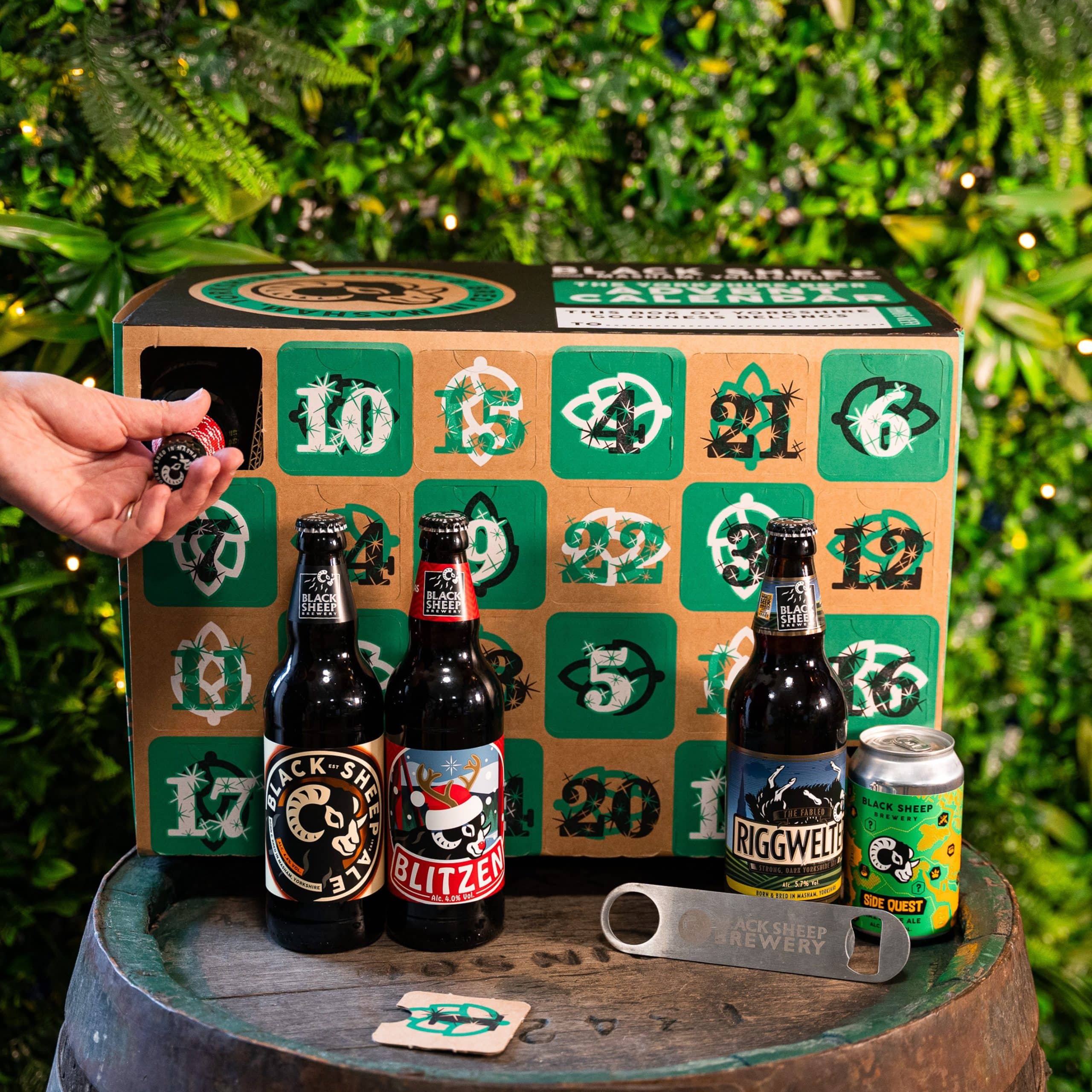
Client and sector: Black Sheep Brewery, food and drink, brewing in Masham, North Yorkshire for over 30 years.
The challenge: Christmas gifting is dominated by supermarket deals and global beer brands, and Black Sheep was not getting its share of online sales.
The insight: Christmas shoppers read gift guides with their wallet out. A mention without a link is awareness; a mention with a link is a sale waiting to happen.
The idea: "every placement a shop window". We judged each potential placement on one question: can the reader click through and buy?
Channels and who ran them: consumer PR, product placement and sampling to national, regional and lifestyle gift-guide editors, timed to the brewery's own promotions, run by our consumer PR team.
Coverage earned: 60 pieces of coverage, 90% of which carried a direct link to the Christmas gifting page.
The result: For Black Sheep Brewery, Prohibition ran a Christmas 2023 gifting campaign that grew festive online sales by £21,000 year on year and tripled Christmas gift purchases, from 60 pieces of linked coverage. Black Sheep's web analytics recorded 548 tracked referrals and a 556% rise in traffic to the gifting range; the sales figures are the brewery's own. The Black Sheep case study sets out each figure by AMEC stage with its source.
What another brand can take from it: choose titles that link, and put tracked links on every placement from day one so each title's sales can be compared.
3. CEWE: an integrated Christmas campaign that lifted orders by 36.6%
Client and sector: CEWE, photo printing, selling photobooks, prints and wall art to UK consumers.
The challenge: grow Christmas orders in a category where the product only matters once the customer has an emotional reason to print.
The insight: printed photographs are bought as gifts of memory, so the campaign needed to make people feel the value of a physical photo before it sold a product.
The idea: consumer research turned into a story platform with a celebrity photographer, a competition and creator content that showed printed photos as the gift that lasts.
Channels and who ran them: research, media relations, influencer activity, video and a competition, planned and produced by one Prohibition team.
Coverage earned: 46 pieces of coverage, 1.9K website taps from social and a 30.2% average influencer engagement rate.
The result: For CEWE, Prohibition ran an integrated Christmas campaign that increased orders by 36.6% year on year and returned £11.60 for every £1 spent, winning Best Integrated Campaign at the 2019 Prolific North Awards. Both figures are as reported in the published case study. See the CEWE Christmas case study and the follow-on CEWE Life in Colour campaign, which restored and colourised entrants' historic family photographs, earning 11 pieces including Mail Online and the Daily Express and reaching 2.4 million of the target audience.
What another brand can take from it: when one team briefs research, press, creators and video against a single idea, the orders figure is measurable because every channel points at the same action.
4. Mappin & Webb: a creator-led launch that lifted branded search by 32%
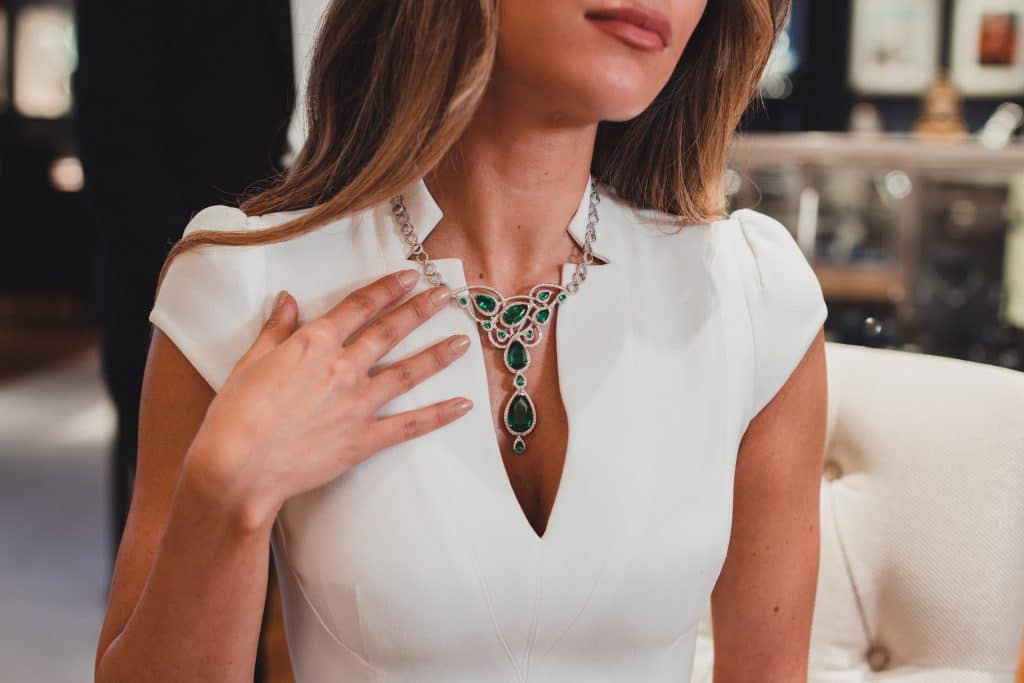
Client and sector: Mappin & Webb, luxury jewellery retail.
The challenge: launch the One Carat Diamond Collection before Christmas to a younger customer than the brand's traditional buyer, justified by the collection's lower price point, and show a return on the creator spend.
The insight: a younger luxury audience takes its cues from a small number of trusted creators whose taste already matches the brand, so one well-chosen partnership would outperform a spread of smaller ones.
The idea: a detailed influencer audit against the brand's objectives, then a single Christmas partnership with Lydia Millen built around video and photography, with Lydia as guest of honour at the Regent Street store launch.
Channels and who ran them: influencer selection and management, campaign video and photography produced in-house, content for the creator's own channels and an in-store launch event.
Coverage earned: over 1 million video views and 1.8 million total reach across video and photography.
The result: For Mappin & Webb, Prohibition ran a creator-led One Carat Diamond Collection launch with Lydia Millen that increased branded search by 32% and delivered a £6.57 topline ROI, alongside a measurable shift in the brand's social audience towards a younger age group. Details in the Mappin & Webb case study.
What another brand can take from it: branded search is the cleanest early signal that creator content has moved intent; agree it as a KPI before the campaign starts.
5. Autoglym: a product launch that converted sceptical enthusiasts at a 2.3 ROAS
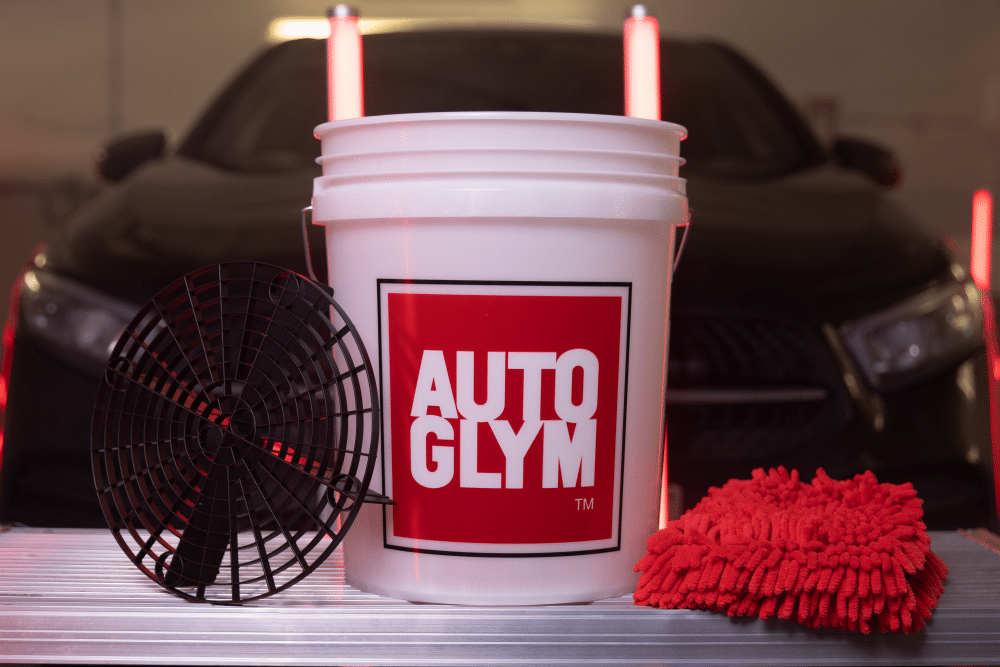
Client and sector: Autoglym, British car care manufacturer sold in more than 45 countries.
The challenge: launch QuikRefresh, a waterless product that restores a "just washed" finish in under 15 minutes, to UK car enthusiasts who are loyal to their existing routines and quick to doubt anything that sounds too easy.
The insight: the barrier was not awareness but trust; the launch would be won or lost in the comments.
The idea: a two-phase launch. Phase one brought the product to life with product, lifestyle and educational image and video. Phase two used social listening to identify specific concerns and misinformation, then answered them with reactive myth-busting content and user-generated proof from early adopters.
Channels and who ran them: in-house creative and video, organic social, social listening and UGC curation from one Prohibition team, with paid social targeting and retargeting supporting the content.
Coverage earned: a relevant reach of 2.7 million, 10K+ engagements and 2K+ clicks to the website.
The result: For Autoglym, Prohibition ran the QuikRefresh launch, delivering a 2.3 return on ad spend on paid social and a 9.1% engagement rate against the next competitor's 1%. The client reported strong sales performance but has not published a sales figure, so we do not quote one. See the Autoglym QuikRefresh case study.
What another brand can take from it: plan a second content wave for objections before launch; the listening budget is cheaper than the sales you lose to unanswered doubt.
6. Freeths: a LinkedIn Live that turned a national story into around 950 leads
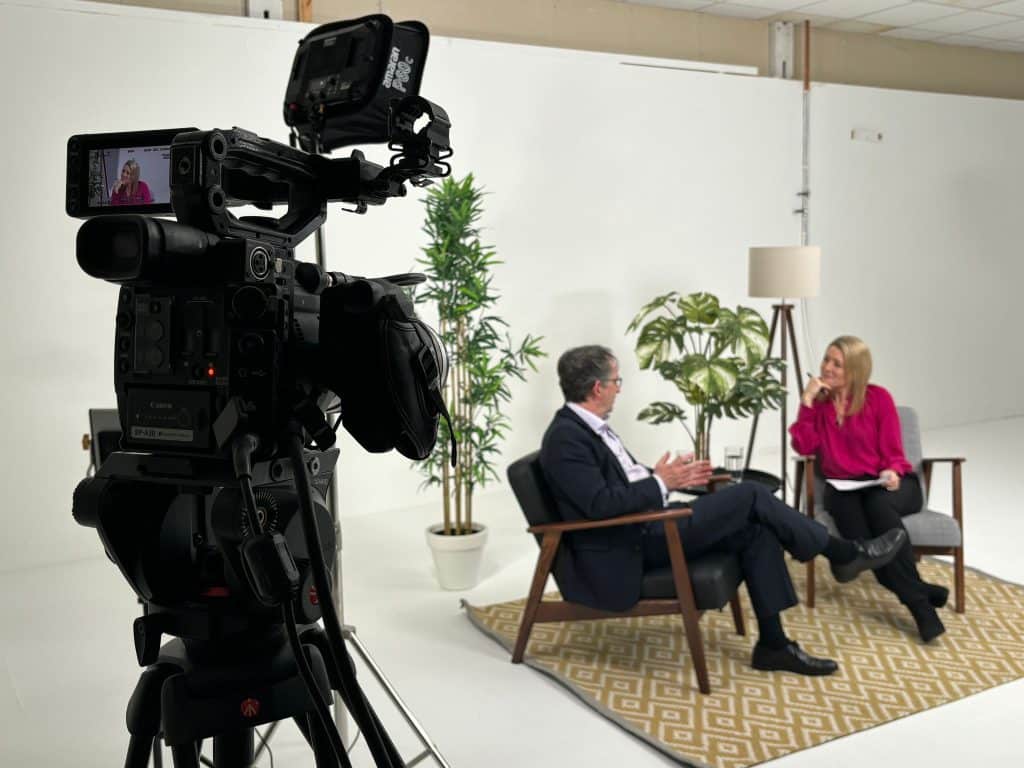
Client and sector: Freeths, a full-service UK law firm whose risk mitigation team fought for years to win justice for the subpostmasters in the Post Office case.
The challenge: after ITV's Mr Bates vs The Post Office put the case in front of the nation, Freeths wanted to reach commercial lawyers and general counsel at large corporations while attention was at its peak.
The insight: the audience that buys litigation services wanted to hear from the lawyer who led the case, not read about him, and LinkedIn was where they would do it.
The idea: a LinkedIn Live with James Hartley, the lawyer who led the case, on the challenges of taking on the Post Office, promoted with teaser content and converted into a lead-capture event.
Channels and who ran them: social content planning, a teaser animation and promo, full event management including filming and streaming, a paid campaign to drive sign-ups, and social monitoring throughout, delivered by our social, creative and video teams.
Coverage earned: a social-first campaign rather than a media relations one: thousands of engagements, including nearly 70 public questions during the live event.
The result: For Freeths, Prohibition ran a LinkedIn Live on the Post Office case in early 2024 that drew over 1,100 attendees and generated around 950 leads for the firm, as reported in the published case study. See the Freeths case study.
What another brand can take from it: B2B PR converts when the format captures a name; a live event with registration does what a press article cannot.
7. Yorkshire Cancer Research: a world record that recruited new supporters
Client and sector: Yorkshire Cancer Research, charity and public purpose.
The challenge: build Yorkshire Day awareness and participation for the Give It Some Welly fundraiser in summer 2020, with a £100K fundraising objective, a need for quality regional coverage, and ambassadors' personal stories to encourage support.
The insight: Yorkshire pride is a stronger motivator than a cancer statistic on its own, so the campaign had to make the statistic feel like a regional cause.
The idea: two linked moments. A "tree of life" installation at Castle Howard by artist Anita Bowerman, made of 195 stainless-steel wellies, each representing 1,000 people in Yorkshire living with or beyond cancer. Then a Guinness World Record attempt for the most people welly wanging on Facebook in one hour.
Channels and who ran them: a media day, regional press and radio, eight celebrity advocates, organic and paid social, a Facebook event for sign-ups and participant video submissions, delivered by our PR, social and video teams.
Coverage earned: 42 pieces including BBC Radio Leeds, BBC Radio York, The Yorkshire Post and York Press, with 54,185 social engagements.
The result: For Yorkshire Cancer Research, Prohibition ran Give It Some Welly in summer 2020, setting a Guinness World Record with 255 participants, 85% of whom were new supporters of the charity, as reported in the published case study. The charity has not published the donation total, so we report the behavioural outcome rather than the fundraising figure. Read the Yorkshire Cancer Research world record story and the Giving Cancer the Boot case study.
What another brand can take from it: for behaviour-change briefs, define the behaviour (sign up, take part, donate) before the stunt, and measure who was new.
Product launch campaigns at a glance
An integrated product launch across PR, social and creators means one idea briefed once, with press, creator content, social and video each given a defined role and a single set of KPIs. Here is what that looked like across our launch work, including two campaigns we have not written up in full.
| Client and product | Audience | Creator and social activity | Outcome |
|---|---|---|---|
| Primula, four new flavours | Trade buyers and consumers | Trade and consumer press office, recipe placement | 50+ national titles; Morrisons listing nationwide |
| Autoglym, QuikRefresh | UK car enthusiasts | In-house video, social listening, UGC, paid social | 2.3 ROAS; 9.1% engagement rate |
| Mappin & Webb, One Carat Diamond Collection | Younger luxury buyers | Lydia Millen partnership, video, in-store launch | +32% branded search; £6.57 topline ROI |
| Drip, Big Zuu's canned water | Drinks buyers reached through national and business media, creators and Drip's sport partnerships | Creator partnerships, social video, Drip's partnerships with Matchroom Boxing and Tottenham Hotspur Women | One national retail listing; 35 pieces of coverage (case study) |
| Better Eggs, challenger egg brand | Grocery shoppers and retail buyers | Not published; full deck on request | Launch to major retail presence and finalist at The Grocer Gold Awards |
The packaged version of this brief is Launch Ignition: audience and category insight, a creative platform, defined roles for PR, social, content, creators and paid, a tease, reveal, advocacy and sustain plan, and a measurement framework for the first three to six months covering coverage, traffic, retailer interest and sales.
What the successful PR campaigns had in common
- A business objective, not a communications one, came first. Black Sheep's brief was online sales; Freeths' was leads; Primula's was a listing. The communications objective was derived from it, so the result could be measured in the client's own data.
- One insight named the barrier. Autoglym's barrier was trust, Black Sheep's was the missing link, Mappin & Webb's was audience age. The idea answered the barrier rather than decorating the brand.
- The call to action was built into the coverage. Linked gift guides, a LinkedIn registration page, a Facebook sign-up event. Attention had somewhere to go.
- Channels were briefed once. Press, creators, social and video worked from the same idea, so the measurement chain was unbroken from first article to final order.
- Someone owned the number at the end. Every case study above names where the outcome figure came from. If an agency cannot do that, the number is an estimate.
Two benchmark PR campaigns from elsewhere
For context, two campaigns from other brands that pass the same test. In February 2021, a single Weetabix tweet pairing its cereal with Heinz Beanz became the UK's top trending topic; Weetabix Food Company reported that Sainsbury's sales of Weetabix Original rose 15% in the week that followed, after over one billion social views, and the brand moved quickly to an in-store activation with the retailer. Cadbury's Worldwide Hide, created by VCCP, lets people hide a virtual Easter egg anywhere in the world for someone they love; by its third year, over a million eggs had been hidden, with the platform's anonymised hiding data turned into localised out-of-home creative. Both are judged here on a measurable action, not on the volume of coverage.
How an integrated team changes the result
Each campaign above was delivered by PR, social, content, creative and video specialists who sit under one roof in Leeds and are briefed once, against one objective, with one measurement framework. That is the practical meaning of our Create, Engage, Convert approach: Create is the audience insight and the barrier it exposes, Engage is the idea and the channels it travels through, Convert is the number the client can verify. We explain the operating model in PR, social media and content marketing in one team and the reasoning behind it in what makes Prohibition different, in plain terms. For established brands that need sustained momentum rather than a launch moment, Growth Catalyst packages an always-on press office, social-first and creator activity and commercial dashboards into a six to twelve month roadmap, while our public relations services cover the individual disciplines from media relations to crisis communications.
How to pressure-test an agency's campaign claims in a pitch
- "Where did this number come from?" A good answer names the data source: the client's analytics, retailer sell-through, CRM, a registration platform. "Our monitoring tool" is a source for outputs, not outcomes.
- "What was the business objective, and did you hit it?" A good answer states the objective as it was set, and is honest where the result fell short or was only partly attributable.
- "How much of this coverage carried a link or a call to action?" A good answer gives a percentage and explains how placements were prioritised for action, not just prestige.
- "What would you have done differently?" A good answer is specific. Ours for Black Sheep was tracked links on every placement from day one.
- "How will you report, and how often?" A good answer describes an AMEC-aligned framework with outputs, outcomes and impact reported separately, reviewed monthly and used to change the plan mid-campaign.
Frequently asked questions
Can you show me PR campaign examples with the idea, the coverage and the business result?
Yes: see the seven campaigns above, from Primula's Morrisons listing and Black Sheep's £21K sales uplift to Freeths' 950 leads, each with the insight, the idea and the coverage that produced it, and a note wherever a commercial figure is not published.
What results can a PR campaign realistically deliver?
A PR campaign can realistically deliver sales (Black Sheep, +£21K online), leads (Freeths, around 950), retail listings (Primula, Morrisons), participation (Yorkshire Cancer Research, 255 record participants), search demand (Mappin & Webb, +32% branded search) and behaviour change such as new supporters. Which one depends on whether the brief set a business objective and built a measurable action into the idea.
Which UK PR agencies can show real business results from integrated PR and social campaigns?
Any agency worth shortlisting should be able to show recent UK case studies with a client-verified outcome. Prohibition PR publishes case studies with a stated commercial or behavioural outcome for Black Sheep Brewery, Freeths, Primula, CEWE, Mappin & Webb and Autoglym. Other agencies that publish outcome-led work are compared in our evidence-based shortlist of UK PR agencies.
How much media coverage should I expect, and does the number of pieces matter?
Volume varies by sector and story: our campaigns above earned between 11 and 60 pieces, and the smallest count (CEWE Life in Colour) still reached 2.4 million of its target audience. Pieces matter less than fit: Black Sheep's 60 pieces counted because 90% carried a buy link. Judge coverage by audience match, message accuracy and whether it carried an action.
How long does a PR campaign take to produce a commercial result?
Campaigns tied to a moment can show results quickly: Freeths' leads were generated through a single live event, and Black Sheep's uplift was measured across one Christmas trading period against the previous year. Listings and brand-level outcomes take longer; Primula's Morrisons listing was supported by a three-month press office. Launch Ignition plans measurement across the first three to six months for this reason.
What does a good PR campaign look like for a consumer brand compared with a B2B or public sector brief?
For a consumer brand, success in the cases above was a purchase action: a listing, online sales or search demand, as with Primula, Black Sheep and Mappin & Webb. For B2B, it is named leads from a decision-making audience, as with Freeths. For public sector and charity briefs, it is participation and behaviour change, as with Yorkshire Cancer Research's new supporters. The structure is the same; the number at the end differs.
What makes a PR campaign fail, and what are the warning signs before you sign?
Campaigns fail when the objective is coverage rather than a business outcome, when the idea does not answer a real audience barrier, and when there is no call to action in the coverage. Warning signs in a pitch: results quoted as reach or AVE only, case studies with no client data source, and channel teams who have not worked from one brief before.
Bring us the challenge
If you are planning PR campaigns for the next twelve months and want to see what the equivalent of these results would look like for your brand, bring us the business challenge rather than the channel plan. We will come back with the insight, the idea and the number we would be prepared to be judged on. Talk to the Prohibition team.
Ready to get started?
Talk to our team and see how we can help.