
Case study · Travel & Leisure
Feather Down runs family glamping on working farms, in one of the most crowded holiday markets in the UK. Our Destination Detox campaign made it the answer to a worry every parent recognises: too much screen time. It earned 88 pieces of coverage, including 22 national placements, and Feather Down had its busiest booking period ever.
- 88 pieces of coverage
- 22 national placements
- 22M media circulation
- +45% web referrals
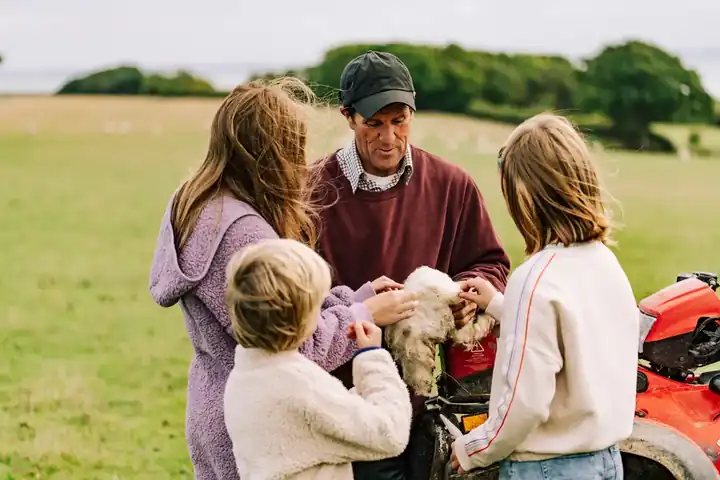
- Client Feather Down
- Sector Travel & Leisure
- Services Campaign, research, press office, influencer marketing
- When November 2024 to June 2025
- Audience UK families with children
- Channels National and regional press, radio, social, influencers
What did Feather Down need?
Feather Down offers family glamping on working farms across the UK and Europe. It came to us wanting more UK families to know about it, visit its website and book.
The family staycation market is saturated. Every holiday brand talks about fresh air and quality time, so Feather Down needed a story of its own.
- Business objective: turn UK awareness into website visits and bookings.
- Communication objective: secure stand-out national and regional coverage, and position Feather Down as the leading provider of glamping and outdoor family breaks.
What was the insight?
Parents already worry about screen time. They talk about it at the school gate and they read about it in the news. In Scotland alone, 68% of parents told our research that screens cost them family time (Feather Down research, reported by the Edinburgh Evening News, March 2025).
A few days on a working farm is a natural way to switch off. So we stopped selling glamping and started solving a problem families already had. The idea was Destination Detox.
What did we do?
- Independent research. We commissioned research into families’ screen use and turned it into a national story, plus regional versions for 14 UK cities and nations.
- An expert voice. Child psychologist Professor Sam Wass explained why time outdoors reduces stress and improves children’s attention.
- Three phases. Phase one launched the research in February and March 2025. Phase two followed with a second wave of national and regional stories. Phase three put real families and influencers on the farm for a digital detox stay in June 2025.
- Press stays. Journalists from national titles, including The Times and The Sun, stayed with their families to write about it first-hand.
- Always-on press office. Regional press and radio stories for families and for farmers, which helped Feather Down recruit new farms to its network.
What did it achieve?
Results by stage of the AMEC evaluation framework, with the source for each figure.
| Stage | Measure | Result | Source |
|---|---|---|---|
| Outputs | Pieces of coverage | 88 | Prohibition coverage log |
| Outputs | National placements | 22 | Prohibition coverage log |
| Outputs | Media circulation | 22M | Prohibition coverage log |
| Outputs | Average domain authority of online coverage | 70 | Prohibition coverage analysis |
| Out-takes | New social media followers from the campaign | About 300 | Feather Down, Clutch review, May 2025 |
| Outcomes | Referral traffic to the website | +45% | Prohibition campaign reporting |
| Outcomes | Organic website traffic, all channels | Doubled year on year | Feather Down, Clutch review, May 2025 |
| Outcomes | Enquiries from farmers wanting to join the network | Increased | Feather Down, Clutch review, May 2025 |
| Impact | Bookings | Busiest booking period ever | Feather Down |
What did Feather Down get from it?
A reason for families to choose Feather Down, and the bookings to prove it worked. The campaign gave it national headlines, a credible expert voice and real families telling the story in their own words.
It had its busiest booking period ever, and more farmers asked to join the network.
“Through the digital detox campaign, we’ve seen increased social media followers. We’ve gained about 300 new followers directly from that campaign.”
What did we learn?
- Own a problem, not a product. Screen time gave journalists a reason to write about glamping.
- One study, many stories. Regional cuts of the research turned one release into 14.
- Let families tell it. Real families on the farm made the final phase the most believable.
- What we would do differently: set up booking tracking by source from day one, so bookings can be tied directly to coverage rather than inferred.